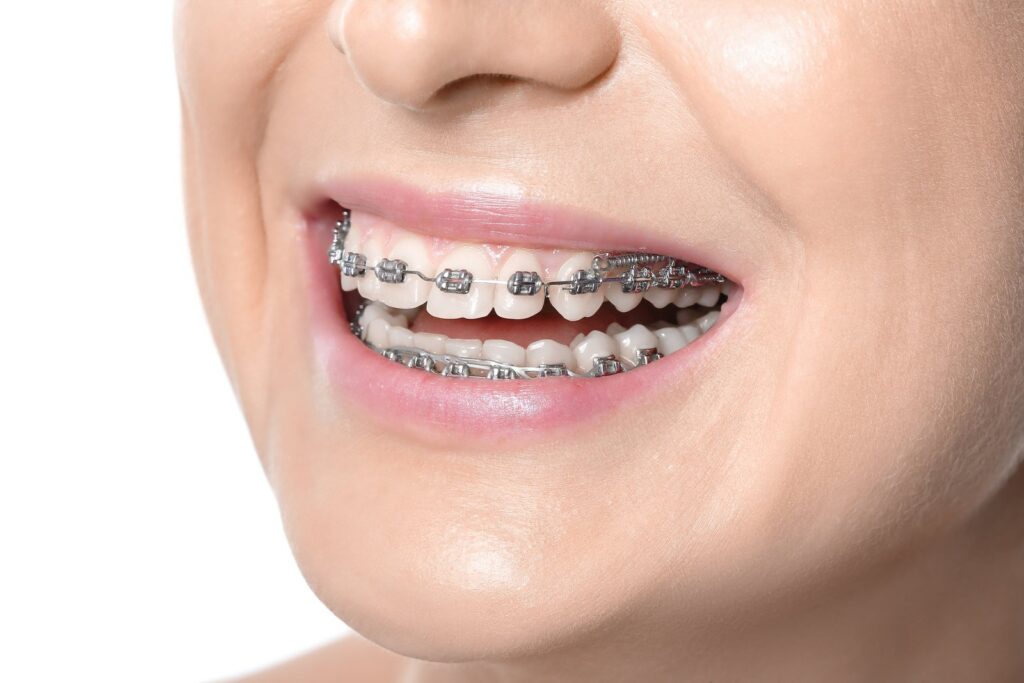
Orthodontic treatment is a significant investment, and navigating insurance benefits can feel complicated before you even schedule your first appointment. Most dental insurance plans with orthodontic coverage follow a similar structure, but the specifics vary widely depending on your employer, plan type, and whether your provider is in-network. Knowing what to look for before treatment begins may help you avoid surprises and get the most from your benefits.
At McCullum Orthodontics, we work with patients from across Clark County and Southern Indiana to help make treatment as accessible as possible. Dr. Heather McCullum, a valedictorian graduate of the University of Louisville School of Dentistry and recipient of the American Association of Orthodontists Award, leads a boutique practice focused on personalized care and transparent communication. Our insurance and financing options are designed to fit a range of budgets and coverage situations.
How Orthodontic Insurance Typically Works
Most dental insurance plans treat orthodontic coverage as a separate benefit from standard dental care. While routine dental visits are often covered at a percentage per visit, orthodontic benefits tend to work differently.
Lifetime Maximums
Rather than renewing annually, many plans provide a one-time lifetime maximum for orthodontic treatment per insured member. Common lifetime maximums range from $1,000 to $2,500, though some employer-sponsored plans offer higher limits. Once the maximum is reached, any remaining balance becomes your responsibility. The American Association of Orthodontists recommends confirming your lifetime maximum, deductible, and any age limitations with your insurer before beginning treatment.
Age Restrictions
Many insurance plans only cover orthodontic treatment for dependents under age 18 or 19, though some plans extend coverage to adults. It is worth calling your insurer directly to ask whether adult orthodontic treatment is included under your specific plan. This is especially relevant if you are considering adult orthodontic treatment and want to make the most of your benefits before starting.
In-Network vs. Out-of-Network Coverage
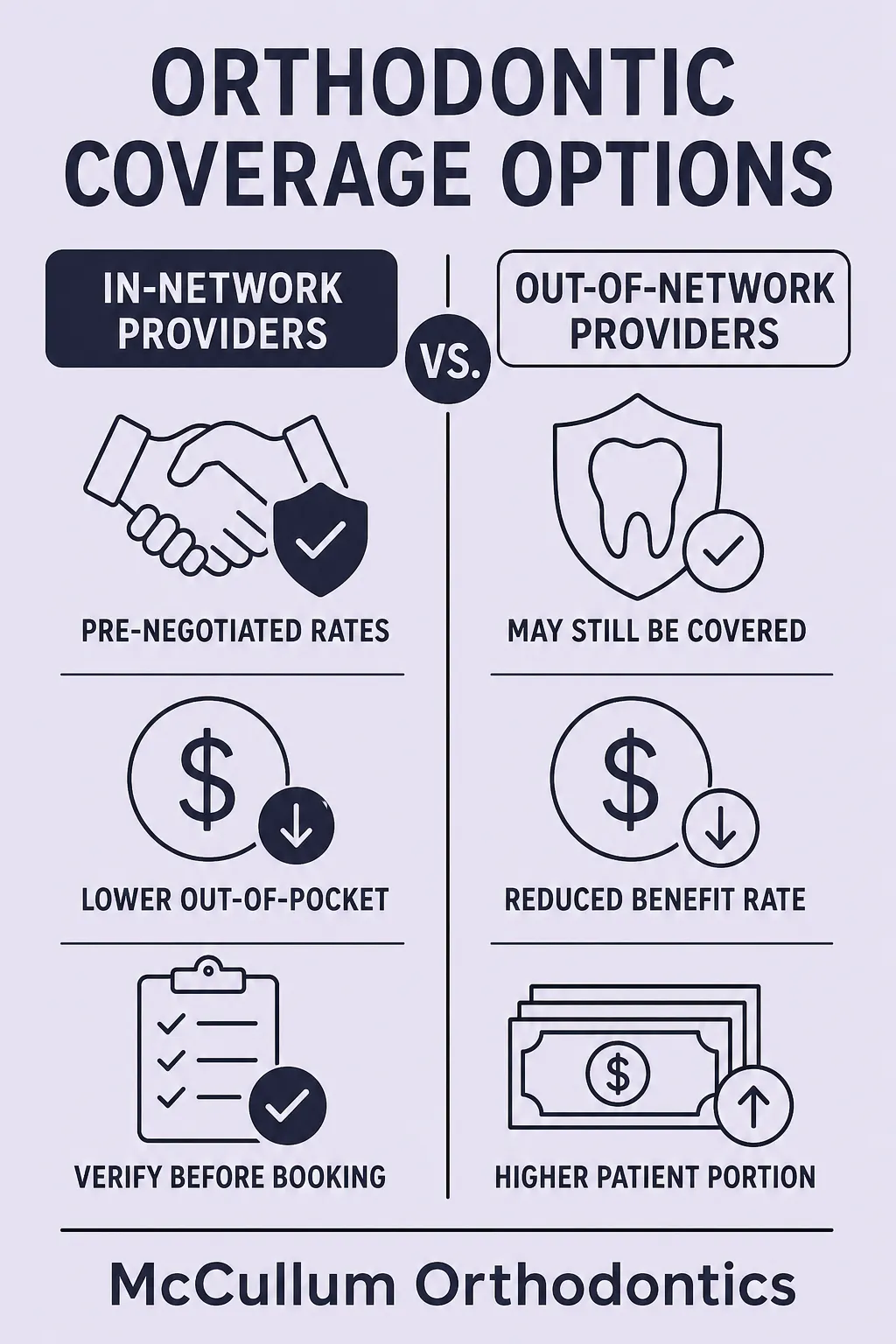
Whether your orthodontist is in-network with your insurance plan directly affects how much you pay out of pocket. In-network providers have pre-negotiated rates with your insurer, which can lower your costs. Out-of-network providers may still be covered under your plan, but at a reduced rate, meaning your portion could be higher.
Before scheduling an orthodontic consultation, it is a good idea to verify whether the practice participates with your specific insurance plan. Our team is happy to help you review your benefits and clarify what your plan covers before you start any treatment.
Making the Most of Your Benefits
There are several practical steps you can take to maximize your orthodontic coverage before treatment begins.
- Confirm your lifetime maximum: Call your insurer and ask specifically how much of your orthodontic lifetime maximum remains unused, particularly if any prior treatment has been completed.
- Ask about waiting periods: Some plans include a waiting period before orthodontic benefits become active. Knowing this timeline helps with treatment planning.
- Clarify covered treatment types: Some plans cover traditional braces, but may have different provisions for clear aligners. Ask your insurer which treatment types qualify under your orthodontic benefit.
- Check dependent age limits: Confirm the age at which dependent coverage ends so you can plan treatment accordingly for your children.
- Ask about FSA or HSA funds: These pre-tax accounts can be used for orthodontic expenses not covered by insurance, helping reduce your overall cost.
Reviewing these details before beginning treatment may significantly reduce out-of-pocket costs and help avoid billing surprises down the road.
Flexible Payment Options Beyond Insurance
Insurance coverage rarely covers the full cost of orthodontic treatment, which is why flexible payment options can be just as important to understand as your benefits. Many orthodontic practices, including ours, offer in-house financing plans allowing you to spread payments over the course of treatment without relying on third-party financing companies.
HSA and FSA funds are also accepted at our practice, giving patients another way to use pre-tax dollars toward care. If your insurance benefit does not stretch as far as you had hoped, combining it with one of these options may make treatment much more manageable financially.
Now Accepting Indiana Medicaid Patients
Families who rely on Indiana Medicaid for healthcare coverage may have more orthodontic options available to them than they realize. McCullum Orthodontics is now accepting Indiana Medicaid patients, making personalized orthodontic care more accessible for families throughout Jeffersonville and Southern Indiana.
What Indiana Medicaid Covers for Orthodontic Treatment
Indiana Medicaid operates through the Indiana Health Coverage Programs (IHCP) and handles orthodontic benefits differently from routine dental care. Orthodontic services under Indiana Medicaid are approved when they are required to correct serious medical or structural problems involving the jaw, teeth, or facial development, not for purely cosmetic alignment. To qualify, a patient must be under 21 years old, have a formal diagnosis of an approved craniofacial condition or severe skeletal abnormality, and have an orthodontic problem that causes functional or medical complications.
Prior authorization is required, and documentation typically includes photographs, panoramic imaging, and a lateral cephalometric film. Our team is experienced in navigating this process and can help you understand whether your child may qualify based on their clinical needs.
How to Know If Your Child Qualifies
If your family is enrolled in a Medicaid managed care plan such as Hoosier Healthwise or the Healthy Indiana Plan, orthodontic eligibility is determined on a case-by-case basis through prior authorization. During your consultation at our office, Dr. McCullum will evaluate your child’s bite, jaw development, and overall orthodontic needs. If there is a medical basis for treatment, we will work with you to gather the documentation needed for the Medicaid review process.
It is worth noting that even if full orthodontic coverage is not approved, Medicaid coverage for associated evaluations or diagnostic records may still reduce your out-of-pocket costs. Combining any available Medicaid benefit with our in-house payment options can help make treatment achievable for your family.
Start Your Consultation at McCullum Orthodontics
Dr. Heather McCullum brings over 14 years of clinical experience and a commitment to personalized, airway-focused orthodontic care to every patient she sees. As a doctor-owned boutique practice rooted in Southern Indiana, we take time to walk through your coverage, explain your out-of-pocket costs honestly, and help you make informed decisions about your care. Dr. McCullum’s credentials and approach to individualized treatment set our practice apart from larger group settings.
Whether you are considering treatment for yourself or your child, we are here to help you make sense of your coverage and take the next step with confidence. Reach out to our office to schedule your consultation and find out what your benefits may cover.
Frequently Asked Questions
What is a lifetime maximum for orthodontic insurance benefits?−
A lifetime maximum is a one-time cap, typically between $1,000 and $2,500, that your insurance plan will pay toward orthodontic treatment for your lifetime rather than resetting annually. Once that maximum is reached, any remaining cost becomes your responsibility.
Does dental insurance cover adult orthodontic treatment?−
It depends on the plan. Many plans only cover dependents under age 18 or 19, though some extend orthodontic benefits to adults. Calling your insurer directly is the best way to confirm whether adult treatment is included under your specific plan.
Can I use FSA or HSA funds for orthodontic treatment?−
Yes. FSA and HSA funds are pre-tax dollars that can be applied toward orthodontic expenses not covered by insurance, and our practice accepts both to help make treatment more affordable.
Does McCullum Orthodontics accept Indiana Medicaid?−
Yes, McCullum Orthodontics now accepts Indiana Medicaid patients. Coverage is approved on a case-by-case basis for patients under 21 with a qualifying medical or structural diagnosis, and requires prior authorization through the Indiana Health Coverage Programs.