Most orthodontic treatment takes between 12 and 24 months, though the exact length depends on the complexity of your case, your age, and the type of treatment you choose. Some patients finish in as little as six months, while more involved cases may take two years or longer. The good news is that a clear picture of your timeline forms quickly once treatment begins, giving you a concrete goal to work toward.
At McCullum Orthodontics in Jeffersonville, Indiana, Dr. Heather McCullum takes a thorough, personalized approach to every treatment plan. Before any appliances go on, she evaluates your bite, jaw development, tooth spacing, and overall oral health to give you an accurate, realistic estimate. With 14 years of experience and advanced training, Dr. McCullum ensures you understand exactly what to expect and why. Our orthodontic services are designed to meet each patient where they are, at their unique starting point.
What Affects Your Treatment Length
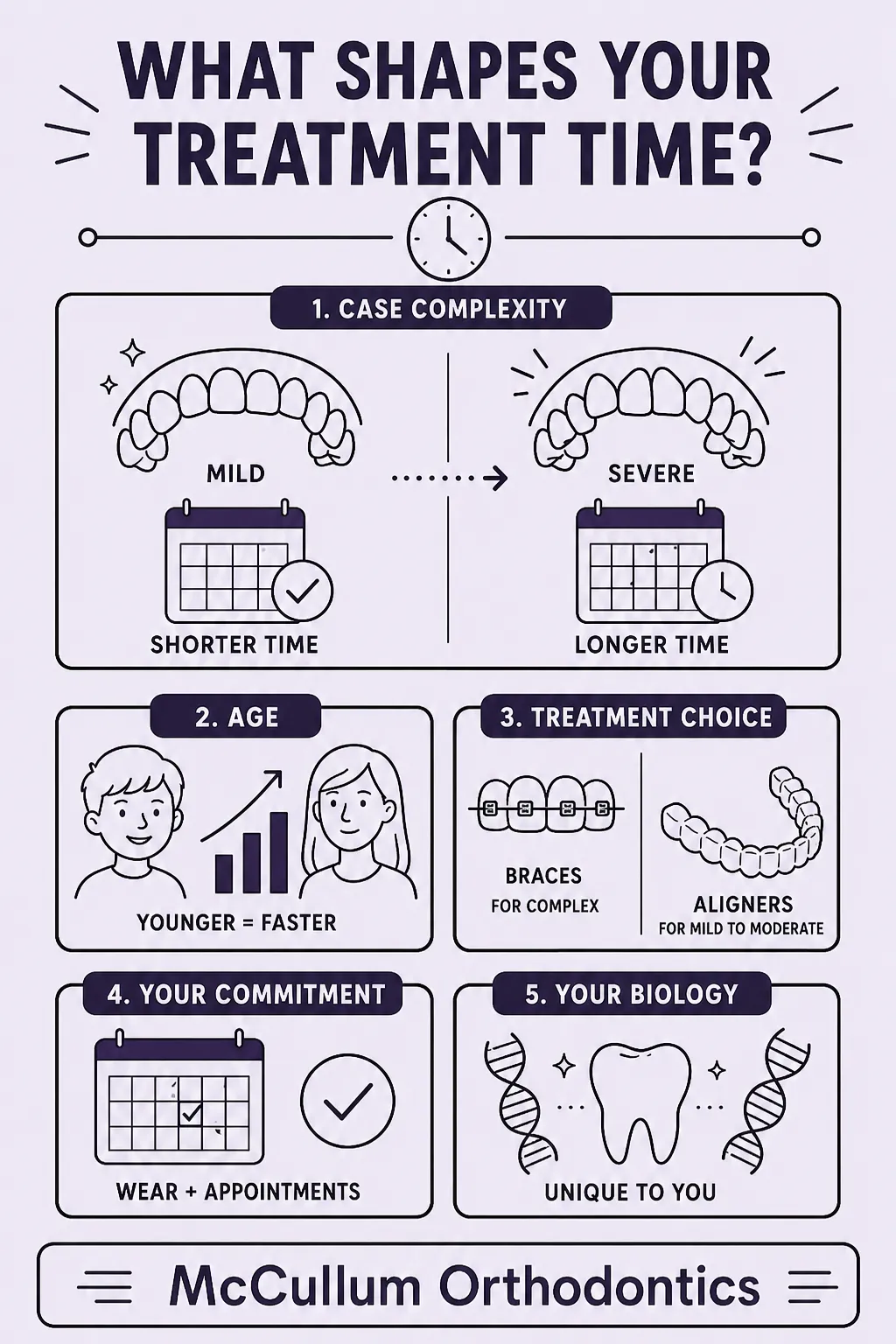
Treatment duration is rarely one-size-fits-all, and several variables play a meaningful role in how long your case takes. Research published in the National Library of Medicine confirms that age, case complexity, missed appointments, and bracket debonding are among the most significant factors influencing the duration of fixed orthodontic treatment. Here are the key factors to keep in mind:
- Severity of the case: Mild crowding or spacing may resolve in less than a year, while significant bite issues, such as an underbite or severe overbite, generally take longer to correct.
- Patient age: Younger patients often respond faster because their jaws are still developing, which makes tooth movement more efficient.
- Treatment type: Braces allow precise control over complex movements, while clear aligners can be highly effective for mild-to-moderate cases when worn consistently.
- Consistency: Wearing removable appliances as directed, keeping scheduled appointments, and following care instructions directly affect treatment efficiency.
- Biology: Every patient’s teeth and bones respond to orthodontic forces differently, and that variation is something even the most experienced orthodontist cannot fully predict in advance.
Each of these factors is evaluated during your initial consultation, so your timeline is as accurate as possible from the start.
Typical Timelines by Treatment Type
Different treatment options come with their own general ranges, and knowing what to expect for each may help you plan. While every case is different, these are common expectations.
Traditional Braces
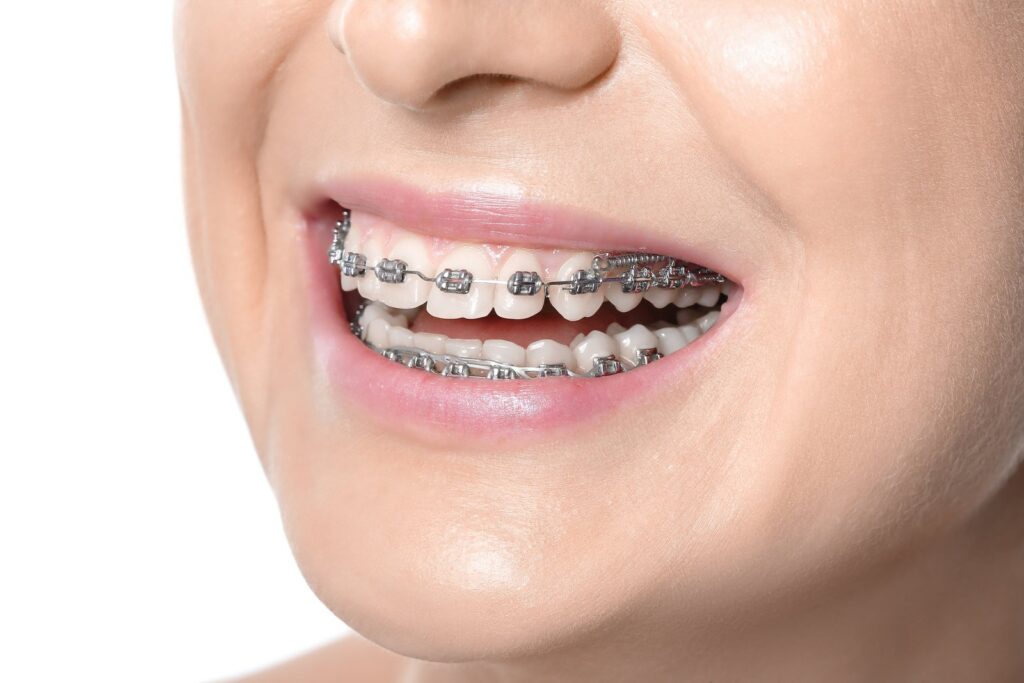
Metal and ceramic braces are often used for moderate-to-complex cases, with treatment typically ranging from 18 to 30 months for comprehensive cases in teens and adults. Patients with simpler alignment concerns may finish closer to 12 to 18 months. Braces give your orthodontist continuous, precise control, which makes them particularly effective for cases requiring significant movement or bite correction.
Clear Aligners
Clear aligners are popular with teens and adults who prefer a more discreet option. For mild to moderate cases, treatment may take 12 to 18 months, and more complex alignment issues may extend the timeline further. One critical variable with aligners is wear time. Aligners should be worn 20 to 22 hours per day to keep treatment on track, and skipping wear time can add weeks or months to your overall timeline.
Early Interceptive Treatment
For younger children, early orthodontic evaluations are recommended around age seven. Interceptive treatment, which may involve palatal expanders or other appliances, typically lasts 9 to 18 months and is followed by a resting phase before comprehensive treatment begins in the early teen years. Starting at the right time can considerably simplify later treatment.
The Retention Phase
Finishing active treatment is not the final step. Once your braces or aligners come off, your teeth need time to settle into their new positions. Retainers are essential to keeping your results long-term. Most patients wear them full-time at first, then transition to nighttime wear. Skipping this phase is one of the most common reasons teeth shift back over time, so it is a critical part of the complete treatment picture.
Start Your Timeline at McCullum Orthodontics
The only way to know your actual treatment timeline is to meet with an experienced orthodontist who can evaluate your specific needs. At McCullum Orthodontics, Dr. McCullum graduated as valedictorian from the University of Louisville School of Dentistry and is a recipient of the American Association of Orthodontists Award. She brings 14 years of experience and a meticulous, patient-centered approach to every consultation, helping families across Jeffersonville and Southern Indiana feel confident about their path forward.
We also offer flexible financing options and work with many insurance plans to make care accessible for your family. When you are ready to take the next step, contact our office to schedule your complimentary consultation and get a clear picture of your personalized treatment timeline.
Frequently Asked Questions
What is the average length of orthodontic treatment?−
Most orthodontic treatment takes between 12 and 24 months, though simple cases can finish in as little as six months and more complex cases may take two years or longer. Your exact timeline depends on case severity, age, and treatment type.
Do clear aligners work faster than traditional braces?−
Not necessarily. Clear aligners typically take 12 to 18 months for mild to moderate cases, similar to braces for comparable cases, but they require 20 to 22 hours of daily wear to stay on schedule. Braces often remain the faster option for more complex bite corrections.
What happens after my braces or aligners come off?−
Active treatment is followed by a retention phase using a retainer to keep your teeth from shifting back. Most patients wear retainers full-time at first, then transition to nighttime wear, and skipping this phase is a common cause of relapse.
Does missing appointments affect my treatment timeline?−
Yes. Research shows that missed appointments and issues like bracket debonding are among the most significant factors that extend treatment time. Keeping scheduled visits and following care instructions helps keep your case on track.